InnovaChem Systems LLP Shop NoN

Plants · INNOVA · Hygiene chemistry that runs on the production clock

Plant hygiene chemicals and equipment for dairy and food factories

A plant cleans on the production clock. Every changeover waits on a clean that passes, and every audit asks for the paperwork behind it. We build INNOVA programmes around your soil, your water and your line, then stand behind them with MSDS, CoA and people on site.

Chemicals
22 INNOVA products
Equipment
Foam, fogging, zoned tools
Paperwork
MSDS, food-grade, CoA per batch
Certified
ISO 9001:2015 · GMP (IAF)

Plants · INNOVA · Dairy

Cleaning that runs on the dairy’s clock.

Scroll

The INNOVA CanClean milk-can scrubber SOP, step by step. Scroll to watch a dirty can come out ready for the next collection.

Milk soil on every can.01 · Dirty milk can

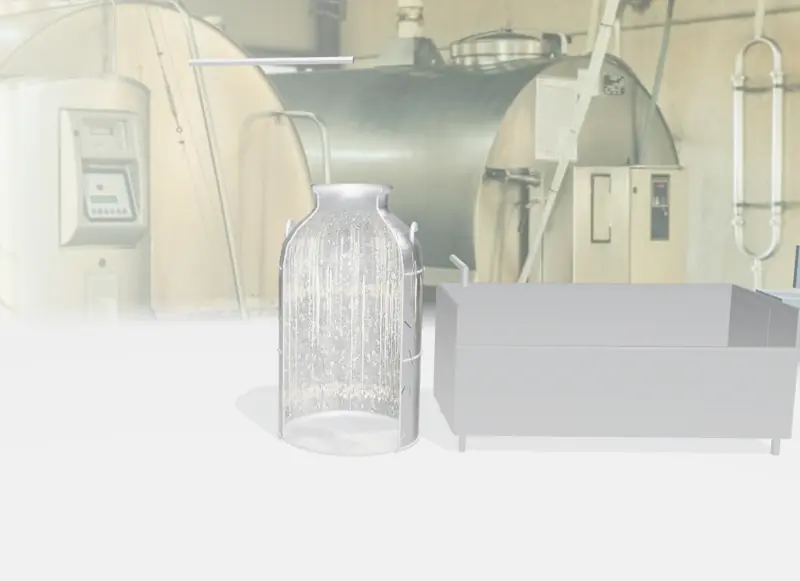
Milk soil on every can.

After each collection round, fat, protein and milkstone dry on the inside wall of the stainless-steel can. Left for a day, they set hard.
Rinse off the loose residue.02 · Pre-rinse

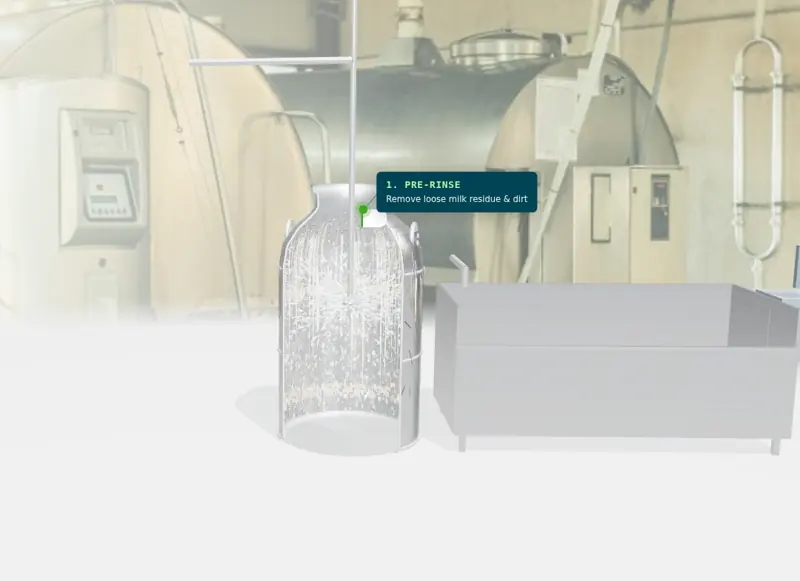
Rinse off the loose residue.

Place the empty, dirty can in the cleaning area and rinse it with clean water to remove loose milk residue, dirt and deposits.
Prepare the cleaning solution.03 · Add INNOVA CanClean

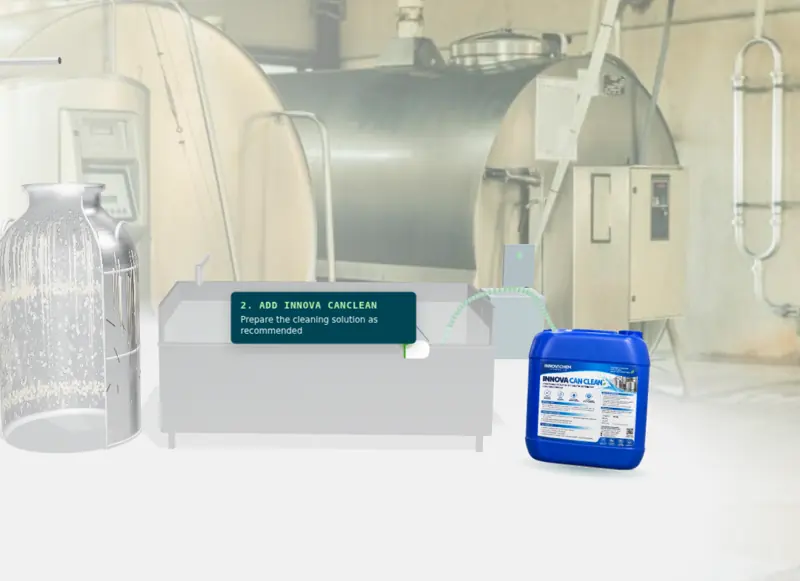
Prepare the cleaning solution.

Fill the can-scrubber tank with water and dose INNOVA CanClean at the approved concentration, following the operating instructions. The solution mixes evenly and circulates.
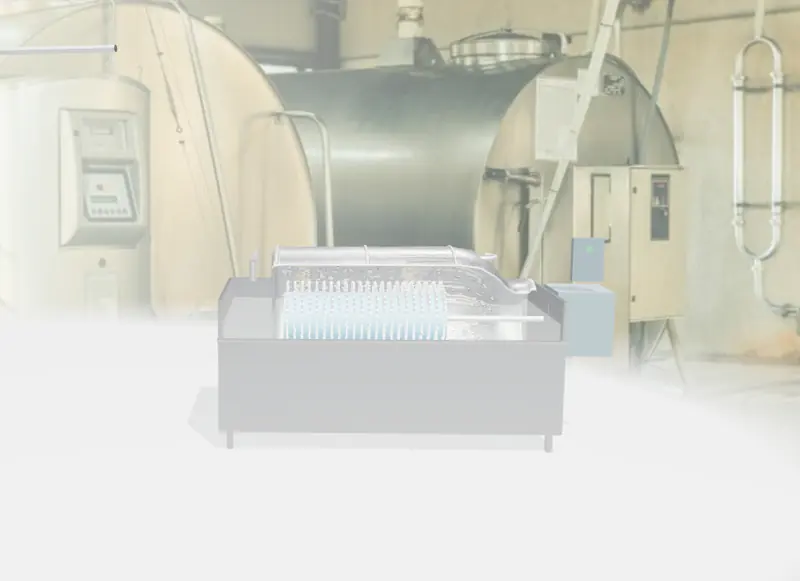
ProductINNOVA CanCleanPack5 kg and 30 kg
Rotating nylon brushes, inside and out.04 · Brush scrubbing

Rotating nylon brushes, inside and out.

Start the scrubber. The can goes into the bath on its side, resting on the rotating roller brushes that scrub the outside. It is pushed mouth-first onto the rotating inner brush, which cleans the inside wall and bottom, while CanClean works on milk residue, fat and dirt.
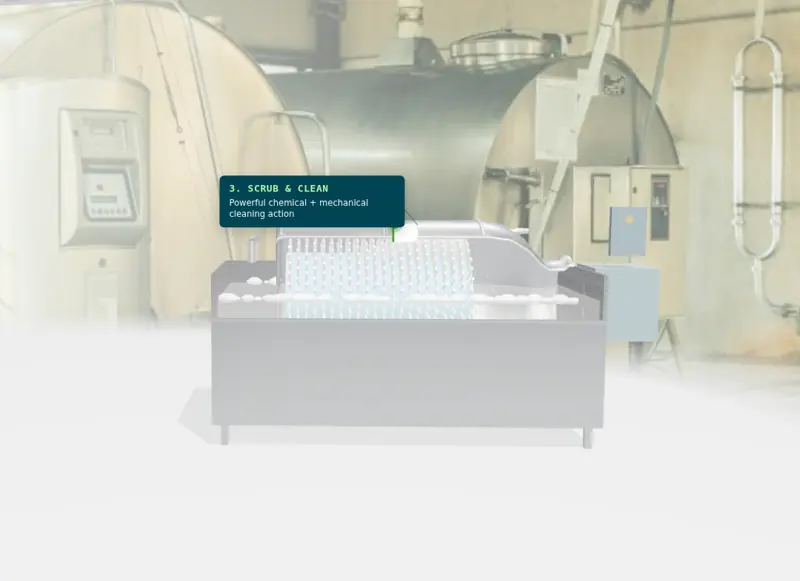
Chemical and mechanical action together.05 · Milk, fat and dirt removal

Chemical and mechanical action together.

Milk-fat and protein deposits loosen, separate from the stainless steel and fall away into the solution. Clean metal shows through.
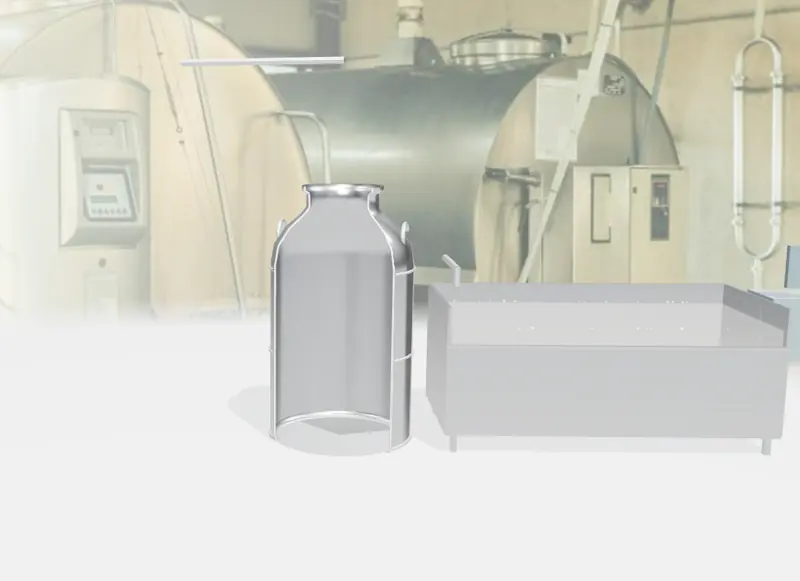
Rinse and drain.06 · Final rinse

Rinse and drain.

After the cycle, rinse the can thoroughly with clean water to remove loosened soil and cleaning solution. Let it drain completely.
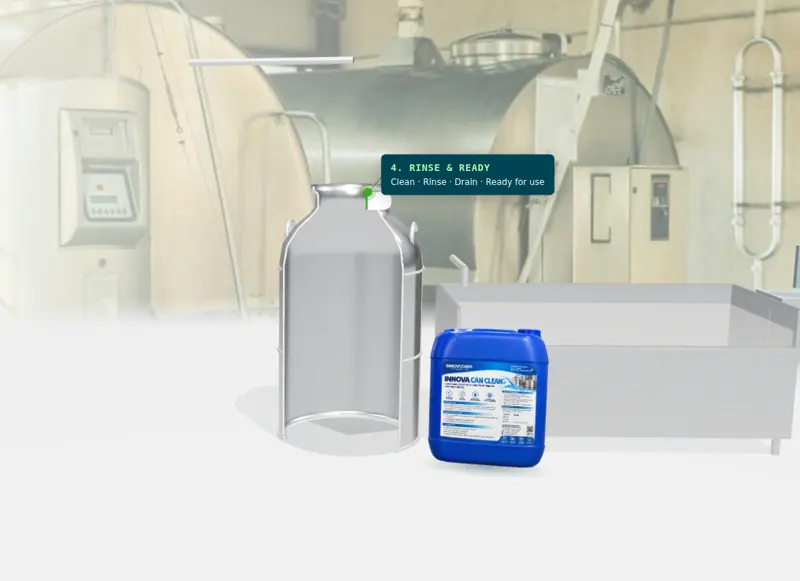
Ready for the next collection.07 · Clean milk can

Ready for the next collection.

Keep the can in a clean position to dry before reuse. INNOVA CanClean, a low-foam can cleaner for hard water, with MSDS and CoA per batch.

Book a plant trial

By application

What goes where on the plant

ApplicationEquipmentMethodINNOVA products
CIP and COPMilk silos, pasteurisers, heat exchangers, pipelinesAlkaline and acid in sequence, then sanitiserINNOVA CIP 50
INNOVA CIP AlkaliPlus
INNOVA CIP Descale
INNOVA PAA 15
Can and crate washingMilk cans, BMC and MCC lines, plastic cratesCan cleaner or crate wash, then rinseINNOVA CanClean
INNOVA CrateWash
Foam cleaningWalls, floors, tank exteriors, conveyorsChlorinated alkaline foam, then sanitiserINNOVA Chlorfoam
Foam Cleaning Machine
INNOVA PAA 15
Beverage linesJuice, flavoured milk and soft drink circuitsChlorinated CIP, antifoam where neededINNOVA CIP TC86
INNOVA AntiFoam SIL900
Plant floor and peopleWarewash, hand hygiene, zoned toolsMachine warewash, hand wash, colour-coded toolsINNOVA MaticWash
INNOVA HandCare
Colour-Coded Cleaning Tools

Questions people ask us

What is CIP cleaning in a dairy plant?

Clean-in-place (CIP) cleans tanks, pipes and heat exchangers without taking them apart. A typical dairy CIP runs a pre-rinse, a hot alkaline wash for fat and protein, an acid wash for milkstone and mineral scale, and a final sanitising step such as peracetic acid.

Which chemical removes milkstone?

Milkstone is a mix of calcium salts and protein that bakes onto hot surfaces. INNOVA CIP 50, a formulated alkaline cleaner, removes the organic and inorganic soil in the caustic step. INNOVA CIP Descale, a formulated acidic cleaner, then clears mineral scale from plates and heat exchangers.

What detergent is used in a milk can scrubber?

A low-foam alkaline can cleaner such as INNOVA CanClean, dosed in the scrubber tank at the approved concentration on the label. Pre-rinse the can, scrub it with the rotating nylon brushes in the CanClean solution, then rinse with clean water, drain and dry.

How do you clean milk cans at a collection centre?

Rinse cans with potable water straight after unloading, wash with a dedicated can cleaner such as INNOVA CanClean at the recommended concentration and temperature, rinse again, then drain and dry inverted. Hard water sites need a cleaner with sequestrants to avoid film.

Do your products come with MSDS and CoA?

Yes. Every INNOVA product ships with MSDS, food-grade certification and a Certificate of Analysis on request, per product and batch.

Can you audit our current cleaning programme?

Yes. Start with the free plant hygiene check on this site. It takes about four minutes and gives you an instant report. Our team then follows up to plan a site visit or trial.

Not sure what your plant needs?

Take the four-minute hygiene check. You get a score and a matched programme straight away.

Sanitiser strengths at a glance

Typical no-rinse limits for food-contact surfaces. Your product TDS and your validated programme govern.
WhatTypical range
Peracetic acid (INNOVA PAA 15)100 to 200 ppm; no-rinse limit 200 ppm [source]
Chlorine (INNOVA Hypo)50 to 200 ppm available chlorine; no-rinse limit 200 ppm [source]
Quat (INNOVA QuatShield)150 to 400 ppm; most no-rinse limits 200 ppm [source]
Alkaline CIP (INNOVA CIP 50)0.5 to 2% at 75 to 82 °C [source]
Acid CIP (INNOVA CIP Descale)0.5 to 1.5% at 55 to 70 °C, 10 to 20 minutes [source]

Reviewed by the InnovaChem technical team · Updated

CallWhatsAppRequest a quote